
Squash Vine Borers: 7 Ways to Stop Them and Save Your Harvest
TL;DR: Stop squash vine borers by covering young squash plants before moths arrive, removing eggs, and checking stems for tiny holes and sawdust-like frass. If your zucchini is already infested, you may still save it by carefully removing the caterpillar and covering healthy vine nodes with moist soil to encourage new roots, but catching the damage early gives your plant the best chance of recovery.
Your zucchini looks terrific in the morning, with big green leaves, yellow flowers, and a few little squash coming along nicely. By evening, half the plant is sprawled across the soil.
You watered it yesterday. The soil still feels damp. So what’s going on?
There’s a good chance a squash vine borer has been chewing through the stem while you weren’t looking.
These pests do most of their damage out of sight. They’re common across much of the eastern and central United States, where they can ruin zucchini, summer squash, pumpkins, and other squash crops.
The trick is catching them early. You don’t need a complicated pest-control routine, just a little protection, regular stem checks, and a sensible plan for plants that are already damaged.
7 Ways to Stop Squash Vine Borers
If you’re wondering what actually works, start here. These seven approaches cover everything from protecting healthy squash to rescuing a vine that’s already been attacked.
- Remove squash vine borer eggs before they hatch.
- Protect young squash with row covers before moths arrive.
- Wrap vulnerable stems to discourage egg laying and larval entry.
- Remove caterpillars from infested stems while the plant is still salvageable.
- Time a second planting to avoid peak moth activity where possible.
- Grow less-susceptible squash varieties such as butternut and Tromboncino.
- Remove infested vines and clean up to reduce the number of borers returning next year.
Not every method is needed in every garden. The right choice depends on whether your squash is healthy, newly infested, or already collapsing.
First, Decide Whether to Protect, Rescue, or Replant
Not every wilted squash needs surgery, and not every damaged plant is worth rescuing.
Before reaching for a knife or pest treatment, examine the main stem. Its condition will help you decide whether to intervene or put your effort into the healthy plants nearby.
Match the Solution to Your Plant’s Condition
| What You’re Seeing | What to Do | Your Chances |
|---|---|---|
| Healthy plants with no visible damage | Install protective covers and watch for eggs | Best opportunity to prevent trouble |
| Fresh frass around a small stem hole | Locate the borer and consider removing it | Reasonable if the crown is firm |
| One wilted runner but healthy growth elsewhere | Remove accessible larvae and encourage new roots | Recovery is possible |
| Several damaged runners and a weakening crown | Check for enough healthy tissue before attempting rescue | Uncertain |
| A rotten crown and widespread collapse | Remove the plant and consider replanting | Recovery is unlikely |
Quick Take: Prevention Beats Rescue
If your squash is healthy, concentrate on keeping moths from laying eggs. If it’s already damaged, check the crown before attempting surgery. A firm, living stem gives you something to work with. A mushy, rotting one usually doesn’t.
Keep a Few Supplies Handy
You won’t need anything fancy. Most of what you’ll use is probably already in the garden shed.
- Floating row covers and garden staples: Keep egg-laying moths away from young squash.
- A sharp razor blade and tweezers: Help remove caterpillars from damaged stems.
- A small hand trowel: Covers healthy vine nodes with loose soil to encourage new roots.
- Aluminum foil or flexible fabric: Makes loose collars around vulnerable stems.
Keep rubbing alcohol handy for cleaning your blade between plants. The last thing an already damaged stem needs is another problem.
How to Spot Squash Vine Borers Before They Do Serious Damage
When a squash plant suddenly wilts, most gardeners reach for the hose. Sometimes that’s exactly what the plant needs, but not always.
A squash vine borer feeds inside the stem, damaging the tissue that carries water through the plant. That’s why the leaves can droop even when the soil is moist.
I’d check the stem before adding more water.
What Does a Squash Vine Borer Look Like?
The squash vine borer (Melittia cucurbitae) begins life as a tiny egg laid by a moth. Once it hatches, the caterpillar bores into a squash stem and starts feeding.
The Adult Moth
Adult squash vine borers look a little like wasps, with reddish-orange and black markings and partly transparent wings.
Unlike many moths, they’re active during the day. You might spot one flying low around your squash plants on a sunny afternoon.
They move quickly, and it’s easy to mistake one for another harmless insect visiting the vegetable patch.

Judy Gallagher / Wikimedia Commons,
CC BY 2.0.
The Eggs
Female moths lay small, flattened, reddish-brown eggs, often singly on lower stems.
They’re easy to miss, particularly on sprawling zucchini plants with leaves covering most of the crown.
If you find an egg before it hatches, carefully removing or crushing it can stop that caterpillar from entering the stem.
The Caterpillar
The larva is cream-colored with a darker brown head.
Once inside the vine, it feeds where ordinary surface sprays have difficulty reaching it. By the time leaves begin wilting, the caterpillar may have been feeding for some time.
Three Warning Signs You Shouldn’t Ignore
The first signs can be surprisingly small. A little damp material beside the stem may be your only clue.
- Tiny stem holes: Young caterpillars bore through the outer surface, often near the plant’s base.
- Sawdust-like frass: Damp, yellowish-green, tan, or orange-brown material collects around the entry hole.
- Unexpected wilting: One runner may droop while other growth still looks healthy.
What Fresh Frass Tells You
Frass is the waste left behind by a feeding caterpillar. Sometimes there’s only a little pile caught underneath a runner where it touches the soil.
It’s easy to miss unless you push the leaves aside and look closely.
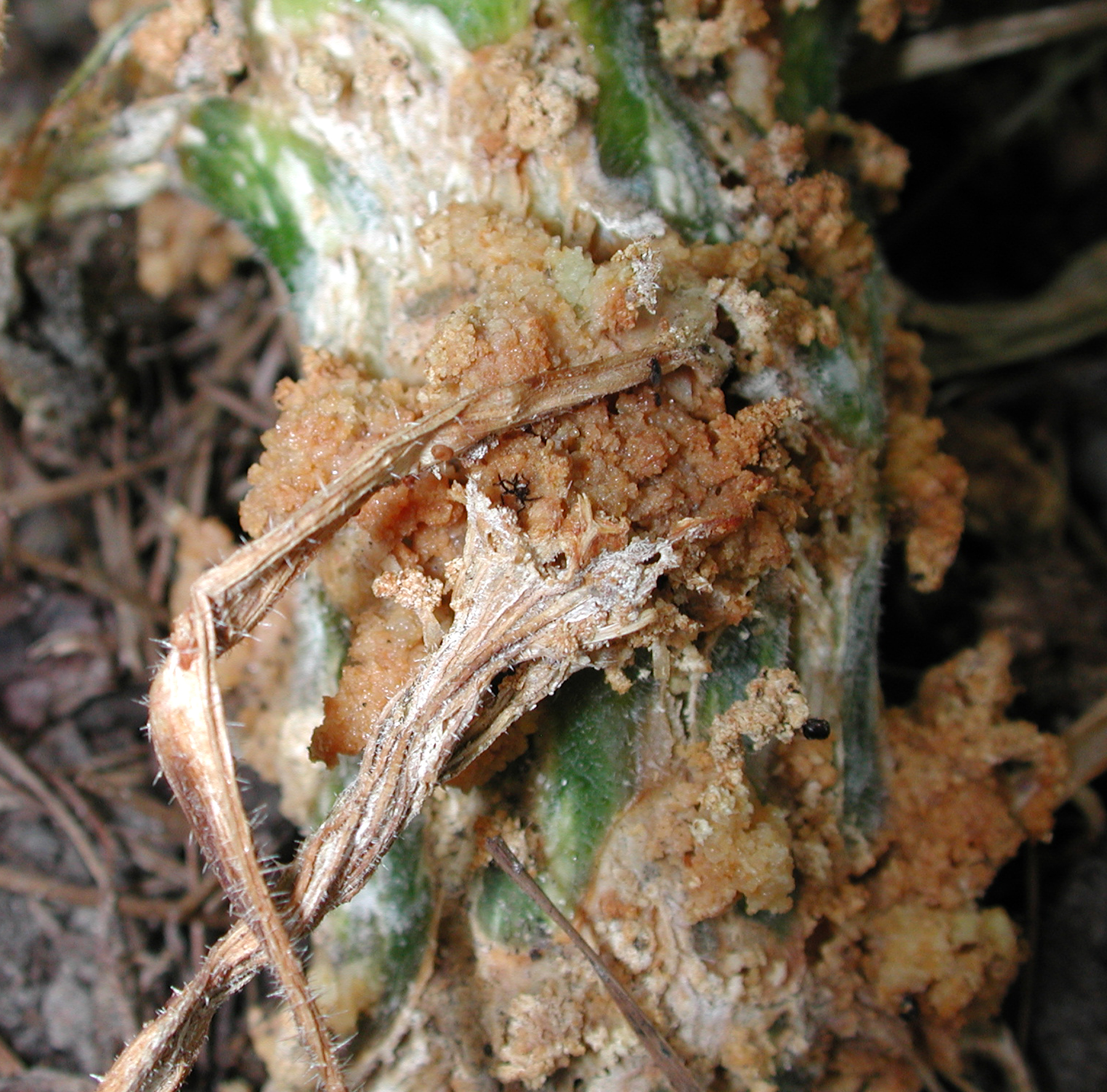
Pollinator / Wikimedia Commons,
CC BY 2.5.
Is Your Squash Wilting From Heat or Vine Borer Damage?
Not every drooping squash plant has a pest problem.
Those enormous leaves can lose water faster than the roots replace it on a hot afternoon. A zucchini can look thoroughly miserable at three o’clock and stand upright again the following morning.
Check the soil, inspect the stem, and see whether the plant recovers overnight.
| Symptom | More Likely Cause | What to Check |
|---|---|---|
| Leaves wilt during afternoon heat but recover overnight | Heat stress | Soil moisture and morning recovery |
| Most leaves wilt and soil is dry | Drought stress | Root-zone moisture |
| One runner wilts while others remain healthy | Possible squash vine borer | Entry holes and frass |
| Leaves stay limp in the cool morning | Serious stem or root damage | Crown, roots, and lower stems |
| Fresh frass appears beside a stem hole | Strong evidence of squash vine borer | Location and extent of tunneling |
Gardener’s Note: Don’t Judge by Wilting Alone
Early borer damage can resemble heat stress, and frass isn’t always visible. Check the stem before deciding what’s wrong. A little detective work beats cutting into a perfectly healthy zucchini.
If your squash has white, powdery patches on its leaves instead of stem holes and frass, take a look at our powdery mildew treatment guide to help narrow down the problem.
Where to Look for Damage
Forget the upper leaves for a moment. Get down close to the soil.
Start With the Main Stem
Look where the main stem emerges from the ground. Check for tiny holes, discoloration, and anything resembling damp sawdust.
The damage can be tucked beneath a thick stem, completely hidden from above.
Follow the Lower Runners
Trace the lower vines, particularly around leaf joints and branching points. Gently lift runners where possible without breaking them.
If a runner has rooted into the ground, leave those roots alone. They may already be helping support the plant.
When Should You Start Checking?
Squash vine borers don’t follow the same calendar everywhere.
In many northern states, moths are active in early to midsummer. In warmer southern regions, they may appear earlier, and additional generations can extend the danger.
A Simple Scouting Routine
- Before moth season: Begin inspecting lower stems, especially if you’ve had borers before.
- During active moth flights: Check two or three times weekly for eggs, entry holes, and frass.
- When damage appears: Examine the affected plant promptly while the crown may still be healthy.
This doesn’t need to become another big garden chore. A quick inspection while watering or picking zucchini is usually enough to stay alert.
Can You Save a Squash Plant That’s Already Infested?
Sometimes, yes. A squash with one damaged runner and a firm crown may still have plenty of life left in it.
But a zucchini with a rotting central stem is another story. You can spend an afternoon trying to rescue it and still end up pulling it out a few days later.
I’d make the decision based on the stem, not how miserable the leaves look.
Check the Crown Before You Do Anything Else
Feel the main stem near the soil.
If it’s firm and green, with healthy growth beyond the damage, a rescue may be worthwhile. If it’s soft, hollowed out, or rotting, the odds are much poorer.
Mini Checklist: Is Your Squash Worth Saving?
- The main crown is mostly firm and hasn’t started rotting.
- Some leaves and runners still look healthy.
- The damage appears concentrated in one section.
- There’s enough living stem tissue to support new growth.
A plant doesn’t have to look beautiful to be worth saving. It just needs enough healthy tissue left to keep growing.
How to Remove a Squash Vine Borer by Hand
Carefully opening the affected stem and removing the caterpillar is a traditional rescue method.
It sounds drastic, but once a pest is feeding inside the vine, spraying the outside won’t reliably reach it. The key is to cause as little additional damage as possible.
Step 1: Find the Damaged Section
Locate the fresh frass and follow it to the entry hole.
The caterpillar may have moved along the stem, so don’t assume you’ll find it directly beneath the hole.
Take your time. Cutting into healthy tissue unnecessarily can leave the plant worse off.
Step 2: Make a Shallow Lengthwise Slit
With a clean, sharp blade, carefully cut along the length of the affected stem.
Avoid cutting across it. A crosswise cut can sever more tissue that the plant needs to carry water and nutrients.
Open only enough of the stem to locate the caterpillar. You’re removing a pest, not splitting the vine from end to end.
Step 3: Remove the Caterpillar
Gently open the slit and look inside.
Use tweezers or the tip of your blade to remove the cream-colored larva, taking care not to tear more tissue than necessary.
Check the nearby cavity too. Occasionally, more than one caterpillar is feeding in the same plant.

Photo:
New York State IPM Program at Cornell University / Wikimedia Commons,
CC BY-SA 2.0.
Step 4: Help the Plant Develop New Roots
If your squash has healthy runners, mound loose, moist soil over nearby nodes where the leaves join the stem.
Many vining squash plants can grow roots from these buried points. The extra roots may help the plant take up water despite damage farther back along the vine.
Keep the soil lightly moist while roots develop. Avoid burying a rotting crown or leaving an open wound in soggy soil.
What to Do After Removing the Borer
Give the plant steady moisture without soaking the bed. Keep healthy foliage in place so the plant can continue growing.
Watch for Recovery
Over the next several days, check the wounded stem. Fresh frass may mean another caterpillar is feeding, while softening or darkening tissue may signal worsening rot.
Some plants recover well. Others struggle, and badly wilted leaves may never regain their shape.
When to Call It
If the crown keeps rotting and nearly all the foliage remains collapsed, I’d pull the plant and use the space for something else.
A second zucchini planting may still be possible if your growing season is long enough.
Does Injecting Bt Into Squash Stems Actually Work?
You may have seen advice recommending injections of Bacillus thuringiensis, usually called Bt, directly into squash stems.
Bt affects certain caterpillars when they ingest it. That’s why some growers try introducing it into the internal feeding tunnel.
Why the Results Are Uncertain
University extension recommendations differ on how useful the method is.
Some extension publications discuss Bt stem injections as a possible rescue technique. Others, including University of Minnesota Extension, do not recommend relying on Bt for squash vine borer control.
There’s no universally accepted injection dose that guarantees success. For a few backyard plants, I’d concentrate on removing accessible caterpillars rather than relying on injections.
Check the Product Label
If you decide to use a pesticide, its label must permit the intended crop, pest, and application method.
Don’t inject an ordinary foliar Bt spray simply because you’ve read about the technique online.
Important Note
Even if a treatment kills the caterpillar, it can’t repair stem tissue that’s already been hollowed out. The plant still needs enough healthy stem and roots to recover.
How to Keep Squash Vine Borers Away From Healthy Plants
After spending an afternoon opening a squash stem and hunting for a caterpillar, keeping the moths away sounds like a much better use of your time.
Row covers, careful timing, and occasional stem inspections work better together than relying on one trick.
Use Row Covers While Plants Are Young
Floating row covers are one of the handiest things to keep around a vegetable garden.
The lightweight fabric allows light, air, and water through while preventing adult moths from reaching the plants underneath.
Install the cover before squash vine borers become active, ideally as soon as you plant in a suitable bed. In hot weather, breathable insect netting may be a better choice than heavier fabric.
Seal the Edges Properly
Secure the edges with garden staples, stones, or soil. A loose cover with gaps along the bottom won’t stop a moth from reaching your squash.
Leave enough room for plants to grow without pushing against the fabric.
For setup instructions, see our guide to using floating row covers for garden pests.
Watch Out for Borers Emerging From the Soil
There’s a catch with row covers that often surprises gardeners.
Squash vine borers spend part of their life cycle underground. If last year’s bed was infested, moths may emerge from the soil beneath your new cover.
Instead of keeping them out, you’ve trapped them beside the plants.
Whenever possible, cover squash planted in a fresh area rather than soil where borers are likely to be overwintering.
Remember the Flowers Need Pollinating
Squash plants produce separate male and female flowers. Bees and other pollinators usually move pollen between them.
Once flowering begins, remove the cover to provide pollinator access, or hand-pollinate the female flowers yourself.
For most backyard gardeners, uncovering flowering plants is simpler than managing daily hand-pollination.
Quick Take: Getting Row Covers Right
Install covers before moths arrive, seal the edges, and have a plan for pollination once flowers open. Row covers are excellent protection, but timing matters.
Wrap the Lower Stems for Extra Protection
A loose aluminum foil collar around the lower stem may make it harder for young caterpillars to enter the protected section.
Some gardeners use flexible fabric strips instead. The idea is to cover the area where moths frequently lay eggs.
Give the Stem Room to Grow
Squash stems thicken surprisingly quickly. A collar that fits well today can become too snug as the plant grows.
Check and loosen it regularly. Female moths can lay eggs on other exposed sections, so collars are an extra barrier rather than complete protection.
Try Planting Around Peak Moth Activity
In areas with one main squash vine borer generation, a second planting can sometimes avoid the worst damage.
Many northern gardens experience peak moth activity in early or midsummer. Planting fast-growing squash after that flight period may provide another harvest.
Example: Getting a Second Zucchini Harvest
Imagine your first zucchini plants are struggling in July.
Instead of spending the rest of summer nursing damaged vines, you sow a few fast-maturing zucchini seeds in a fresh bed once the main moth flight has passed.
If there’s enough warm weather before the first frost, those younger plants may still produce a useful crop.
Check Your Growing Season First
Later plantings can still be attacked in warmer regions with extended moth activity.
Check your seed packet’s days to maturity and your expected frost date before planning another crop.
Our guides to what to plant in July and understanding your last frost date can help you decide whether there’s enough time left.
Grow Squash Varieties That Borers Find Less Appealing
If you lose zucchini to squash vine borers every summer, changing varieties is worth considering.
Zucchini, many other summer squash, Hubbard squash, and some pumpkins are particularly vulnerable.
Butternut squash, Tromboncino, and other varieties of Cucurbita moschata tend to be less susceptible.
They’re useful alternatives where borers are a regular nuisance, although no squash variety is completely immune.
| Squash Type | General Susceptibility | Growing Advice |
|---|---|---|
| Zucchini | High | Protect early and inspect often |
| Yellow summer squash | Varies by variety | Use barriers and regular scouting |
| Hubbard squash | High | Prioritize prevention |
| Many pumpkins | Moderate to high | Check crowns and lower vines |
| Butternut squash | Generally lower | Good for borer-prone gardens |
| Tromboncino squash | Generally lower | Alternative to ordinary zucchini |
A Practical Compromise
You don’t have to give up zucchini altogether.
Grow a less-susceptible squash alongside it. You can still enjoy your favorite varieties without depending entirely on one vulnerable crop.
Use Traps to Find Out When Moths Are Active
Pheromone traps attract male squash vine borer moths and help show when adults are flying.
Yellow water traps are another monitoring option.
What a Trap Catch Means
A trapped moth tells you that borers are active nearby. It doesn’t mean the infestation has been controlled.
For a garden with just a few squash plants, watching for adults during the day and inspecting stems may be equally practical.
Clean Up Infested Vines Before the Season Ends
When squash vine borer larvae finish feeding, they leave the stems and enter the soil to pupate.
That’s how the pest can return next year. Removing infested vines while larvae are still inside may interrupt part of the cycle.
End-of-Season Cleanup Checklist
- Remove badly infested vines promptly while larvae may still be inside.
- Bag and discard heavily infested plant material according to local waste guidance.
- Clear away damaged vines and leftover crop debris after harvest.
- Move susceptible squash to a different bed next season if space allows.
Crop rotation may reduce exposure to borers overwintering in one bed, but adult moths can fly in from nearby gardens. Don’t count on rotation alone.
A Simple Squash Vine Borer Prevention Calendar
The easiest way to manage squash vine borers is to build a few checks into the jobs you’re already doing.
Follow the plants through the season and concentrate on what matters at each stage.
| Garden Stage | What to Do | Why It Helps |
|---|---|---|
| Before planting | Choose a suitable bed and consider less-susceptible varieties | Reduces exposure to existing pests |
| Planting time | Install row covers before moths arrive | Blocks egg-laying moths |
| Early growth | Inspect stems and remove eggs | Prevents some larvae entering |
| First flowers | Remove covers or hand-pollinate | Allows fruit to form |
| Active moth season | Inspect stems two or three times weekly | Finds damage earlier |
| First signs of damage | Assess the crown and remove accessible borers | May save healthy tissue |
| After peak moth activity | Consider a second planting | Can extend the harvest |
| End of season | Remove infested vines and clean the bed | Reduces surviving larvae |
The Prevention Routine at a Glance
Plant and Protect
→
Watch for Moths
→
Check Stems
→
Respond to Damage
→
Clean Up
That’s the basic rhythm. Once you know when moths are active in your area, these checks become part of your normal garden routine.
Gardener’s Note: Timing Depends on Where You Live
A gardener in Minnesota may see squash vine borers at a different time from someone growing zucchini in Georgia. Use this calendar as a guide to the order of tasks, not a fixed set of dates. Local extension pest reports can help you time your protection.
Frequently Asked Questions About Squash Vine Borers
Can a Squash Plant Recover After a Vine Borer Attacks?
Yes, if enough healthy stem tissue remains. Removing the caterpillar and encouraging extra roots along surviving runners may help. A badly rotted central crown is much less likely to recover.
Can I Kill Squash Vine Borers Without Cutting the Stem?
Removing eggs before they hatch can stop larvae from entering. Once a caterpillar is inside, non-surgical options are less dependable. Bt injections are sometimes suggested, but extension guidance differs, and the method isn’t a guaranteed cure.
Will Aluminum Foil Stop Squash Vine Borers?
A loose foil collar may protect part of the lower stem, but moths can lay eggs elsewhere. Treat it as an extra barrier, not your whole protection plan.
Do Squash Vine Borers Attack Cucumbers and Melons?
They strongly prefer squash and pumpkins. Cucumbers and melons are much less commonly attacked, although occasional infestations can occur.
Can I Grow Zucchini Again After Losing Plants to Borers?
Yes. If you have enough warm weather left, another planting of fast-maturing zucchini may still produce. Next season, try a fresh bed and protect plants before moths arrive.
Are Squash Vine Borers Active All Summer?
It depends on where you garden. Northern regions often have one main generation, while warmer southern areas may experience additional generations and a longer period of activity.
What’s the Best Squash to Grow Where Borers Are a Problem?
Butternut and Tromboncino are worth considering because they’re generally less susceptible than many zucchini and Hubbard squash varieties. Neither is immune, but both can be useful in a borer-prone garden.
Keep Your Squash Growing, Not Just Surviving
Finding a squash vine borer is discouraging, particularly when the plant was covered in flowers a few days earlier.
But losing one zucchini doesn’t mean your whole harvest is finished.
If the damage is fresh and the crown is healthy, removing the caterpillar may give the plant another chance. If the stem is badly rotted, I’d pull it and concentrate on plants that still have a future.
Next season, protect young squash before moths arrive. If borers return every year, try growing Tromboncino or butternut alongside your usual zucchini.
Your squash doesn’t need constant attention. It just needs you to notice the little warning signs before they become big problems.
For your next garden project, start with our floating row cover guide, or use our July planting guide to plan another harvest while the weather is still warm.
Trusted Gardening References
The identification, prevention, and rescue advice in this article is informed by university extension guidance.
University of Minnesota Extension: Squash Vine Borers explains identification, monitoring, row-cover protection, and physical removal of larvae.
University of Maryland Extension: Squash Vine Borer on Vegetables covers symptoms, stem protection, and treatment options.
University of Delaware Cooperative Extension: Non-Chemical Pest Control for Cucurbits provides guidance on non-chemical pest-management approaches.
Iowa State University Extension: Preventing Squash Vine Borer Damage discusses prevention, row covers, and managing damaged squash plants.
Specific treatments and moth emergence dates vary by region. Check your local extension service when planning seasonal protection.