
Squash Vine Borers: 7 Ways to Stop Them and Save Your Harvest
TL;DR: Stop squash vine borers by covering young squash plants before moths arrive, removing eggs, and checking stems for tiny holes and sawdust-like frass. If your zucchini is already infested, you may still save it by carefully removing the caterpillar and covering healthy vine nodes with moist soil to encourage new roots, but catching the damage early gives your plant the best chance of recovery.
Your zucchini looks terrific in the morning, with big green leaves, yellow flowers, and a few little squash coming along nicely. By evening, half the plant is sprawled across the soil.
You watered it yesterday. The soil still feels damp. So what’s going on?
There’s a good chance a squash vine borer has been chewing through the stem while you weren’t looking.
These pests do most of their damage out of sight. They’re common across much of the eastern and central United States, where they can ruin zucchini, summer squash, pumpkins, and other squash crops.
The trick is catching them early. You don’t need a complicated pest-control routine, just a little protection, regular stem checks, and a sensible plan for plants that are already damaged.
7 Ways to Stop Squash Vine Borers
If you’re wondering what actually works, start here. These seven approaches cover everything from protecting healthy squash to rescuing a vine that’s already been attacked.
- Remove squash vine borer eggs before they hatch.
- Protect young squash with row covers before moths arrive.
- Wrap vulnerable stems to discourage egg laying and larval entry.
- Remove caterpillars from infested stems while the plant is still salvageable.
- Time a second planting to avoid peak moth activity where possible.
- Grow less-susceptible squash varieties such as butternut and Tromboncino.
- Remove infested vines and clean up to reduce the number of borers returning next year.
Not every method is needed in every garden. The right choice depends on whether your squash is healthy, newly infested, or already collapsing.
First, Decide Whether to Protect, Rescue, or Replant
Not every wilted squash needs surgery, and not every damaged plant is worth rescuing.
Before reaching for a knife or pest treatment, examine the main stem. Its condition will help you decide whether to intervene or put your effort into the healthy plants nearby.
Match the Solution to Your Plant’s Condition
| What You’re Seeing | What to Do | Your Chances |
|---|---|---|
| Healthy plants with no visible damage | Install protective covers and watch for eggs | Best opportunity to prevent trouble |
| Fresh frass around a small stem hole | Locate the borer and consider removing it | Reasonable if the crown is firm |
| One wilted runner but healthy growth elsewhere | Remove accessible larvae and encourage new roots | Recovery is possible |
| Several damaged runners and a weakening crown | Check for enough healthy tissue before attempting rescue | Uncertain |
| A rotten crown and widespread collapse | Remove the plant and consider replanting | Recovery is unlikely |
Quick Take: Prevention Beats Rescue
If your squash is healthy, concentrate on keeping moths from laying eggs. If it’s already damaged, check the crown before attempting surgery. A firm, living stem gives you something to work with. A mushy, rotting one usually doesn’t.
Keep a Few Supplies Handy
You won’t need anything fancy. Most of what you’ll use is probably already in the garden shed.
- Floating row covers and garden staples: Keep egg-laying moths away from young squash.
- A sharp razor blade and tweezers: Help remove caterpillars from damaged stems.
- A small hand trowel: Covers healthy vine nodes with loose soil to encourage new roots.
- Aluminum foil or flexible fabric: Makes loose collars around vulnerable stems.
Keep rubbing alcohol handy for cleaning your blade between plants. The last thing an already damaged stem needs is another problem.
How to Spot Squash Vine Borers Before They Do Serious Damage
When a squash plant suddenly wilts, most gardeners reach for the hose. Sometimes that’s exactly what the plant needs, but not always.
A squash vine borer feeds inside the stem, damaging the tissue that carries water through the plant. That’s why the leaves can droop even when the soil is moist.
I’d check the stem before adding more water.
What Does a Squash Vine Borer Look Like?
The squash vine borer (Melittia cucurbitae) begins life as a tiny egg laid by a moth. Once it hatches, the caterpillar bores into a squash stem and starts feeding.
The Adult Moth
Adult squash vine borers look a little like wasps, with reddish-orange and black markings and partly transparent wings.
Unlike many moths, they’re active during the day. You might spot one flying low around your squash plants on a sunny afternoon.
They move quickly, and it’s easy to mistake one for another harmless insect visiting the vegetable patch.

Judy Gallagher / Wikimedia Commons,
CC BY 2.0.
The Eggs
Female moths lay small, flattened, reddish-brown eggs, often singly on lower stems.
They’re easy to miss, particularly on sprawling zucchini plants with leaves covering most of the crown.
If you find an egg before it hatches, carefully removing or crushing it can stop that caterpillar from entering the stem.
The Caterpillar
The larva is cream-colored with a darker brown head.
Once inside the vine, it feeds where ordinary surface sprays have difficulty reaching it. By the time leaves begin wilting, the caterpillar may have been feeding for some time.
Three Warning Signs You Shouldn’t Ignore
The first signs can be surprisingly small. A little damp material beside the stem may be your only clue.
- Tiny stem holes: Young caterpillars bore through the outer surface, often near the plant’s base.
- Sawdust-like frass: Damp, yellowish-green, tan, or orange-brown material collects around the entry hole.
- Unexpected wilting: One runner may droop while other growth still looks healthy.
What Fresh Frass Tells You
Frass is the waste left behind by a feeding caterpillar. Sometimes there’s only a little pile caught underneath a runner where it touches the soil.
It’s easy to miss unless you push the leaves aside and look closely.
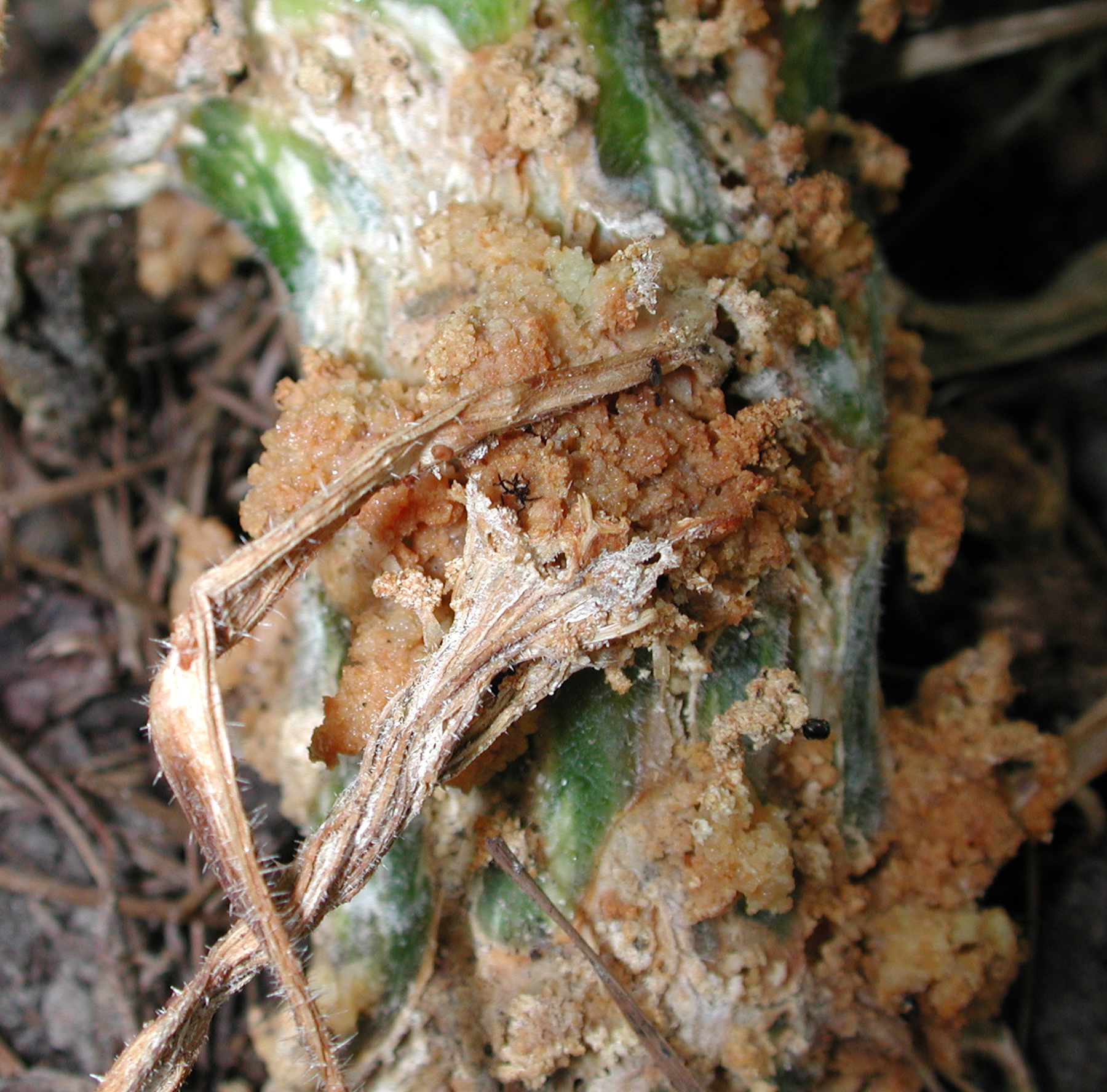
Pollinator / Wikimedia Commons,
CC BY 2.5.
Is Your Squash Wilting From Heat or Vine Borer Damage?
Not every drooping squash plant has a pest problem.
Those enormous leaves can lose water faster than the roots replace it on a hot afternoon. A zucchini can look thoroughly miserable at three o’clock and stand upright again the following morning.
Check the soil, inspect the stem, and see whether the plant recovers overnight.
| Symptom | More Likely Cause | What to Check |
|---|---|---|
| Leaves wilt during afternoon heat but recover overnight | Heat stress | Soil moisture and morning recovery |
| Most leaves wilt and soil is dry | Drought stress | Root-zone moisture |
| One runner wilts while others remain healthy | Possible squash vine borer | Entry holes and frass |
| Leaves stay limp in the cool morning | Serious stem or root damage | Crown, roots, and lower stems |
| Fresh frass appears beside a stem hole | Strong evidence of squash vine borer | Location and extent of tunneling |
Gardener’s Note: Don’t Judge by Wilting Alone
Early borer damage can resemble heat stress, and frass isn’t always visible. Check the stem before deciding what’s wrong. A little detective work beats cutting into a perfectly healthy zucchini.
If your squash has white, powdery patches on its leaves instead of stem holes and frass, take a look at our powdery mildew treatment guide to help narrow down the problem.
Where to Look for Damage
Forget the upper leaves for a moment. Get down close to the soil.
Start With the Main Stem
Look where the main stem emerges from the ground. Check for tiny holes, discoloration, and anything resembling damp sawdust.
The damage can be tucked beneath a thick stem, completely hidden from above.
Follow the Lower Runners
Trace the lower vines, particularly around leaf joints and branching points. Gently lift runners where possible without breaking them.
If a runner has rooted into the ground, leave those roots alone. They may already be helping support the plant.
When Should You Start Checking?
Squash vine borers don’t follow the same calendar everywhere.
In many northern states, moths are active in early to midsummer. In warmer southern regions, they may appear earlier, and additional generations can extend the danger.
A Simple Scouting Routine
- Before moth season: Begin inspecting lower stems, especially if you’ve had borers before.
- During active moth flights: Check two or three times weekly for eggs, entry holes, and frass.
- When damage appears: Examine the affected plant promptly while the crown may still be healthy.
This doesn’t need to become another big garden chore. A quick inspection while watering or picking zucchini is usually enough to stay alert.
Can You Save a Squash Plant That’s Already Infested?
Sometimes, yes. A squash with one damaged runner and a firm crown may still have plenty of life left in it.
But a zucchini with a rotting central stem is another story. You can spend an afternoon trying to rescue it and still end up pulling it out a few days later.
I’d make the decision based on the stem, not how miserable the leaves look.
Check the Crown Before You Do Anything Else
Feel the main stem near the soil.
If it’s firm and green, with healthy growth beyond the damage, a rescue may be worthwhile. If it’s soft, hollowed out, or rotting, the odds are much poorer.
Mini Checklist: Is Your Squash Worth Saving?
- The main crown is mostly firm and hasn’t started rotting.
- Some leaves and runners still look healthy.
- The damage appears concentrated in one section.
- There’s enough living stem tissue to support new growth.
A plant doesn’t have to look beautiful to be worth saving. It just needs enough healthy tissue left to keep growing.
How to Remove a Squash Vine Borer by Hand
Carefully opening the affected stem and removing the caterpillar is a traditional rescue method.
It sounds drastic, but once a pest is feeding inside the vine, spraying the outside won’t reliably reach it. The key is to cause as little additional damage as possible.
Step 1: Find the Damaged Section
Locate the fresh frass and follow it to the entry hole.
The caterpillar may have moved along the stem, so don’t assume you’ll find it directly beneath the hole.
Take your time. Cutting into healthy tissue unnecessarily can leave the plant worse off.
Step 2: Make a Shallow Lengthwise Slit
With a clean, sharp blade, carefully cut along the length of the affected stem.
Avoid cutting across it. A crosswise cut can sever more tissue that the plant needs to carry water and nutrients.
Open only enough of the stem to locate the caterpillar. You’re removing a pest, not splitting the vine from end to end.
Step 3: Remove the Caterpillar
Gently open the slit and look inside.
Use tweezers or the tip of your blade to remove the cream-colored larva, taking care not to tear more tissue than necessary.
Check the nearby cavity too. Occasionally, more than one caterpillar is feeding in the same plant.

Photo:
New York State IPM Program at Cornell University / Wikimedia Commons,
CC BY-SA 2.0.
Step 4: Help the Plant Develop New Roots
If your squash has healthy runners, mound loose, moist soil over nearby nodes where the leaves join the stem.
Many vining squash plants can grow roots from these buried points. The extra roots may help the plant take up water despite damage farther back along the vine.
Keep the soil lightly moist while roots develop. Avoid burying a rotting crown or leaving an open wound in soggy soil.
What to Do After Removing the Borer
Give the plant steady moisture without soaking the bed. Keep healthy foliage in place so the plant can continue growing.
Watch for Recovery
Over the next several days, check the wounded stem. Fresh frass may mean another caterpillar is feeding, while softening or darkening tissue may signal worsening rot.
Some plants recover well. Others struggle, and badly wilted leaves may never regain their shape.
When to Call It
If the crown keeps rotting and nearly all the foliage remains collapsed, I’d pull the plant and use the space for something else.
A second zucchini planting may still be possible if your growing season is long enough.
Does Injecting Bt Into Squash Stems Actually Work?
You may have seen advice recommending injections of Bacillus thuringiensis, usually called Bt, directly into squash stems.
Bt affects certain caterpillars when they ingest it. That’s why some growers try introducing it into the internal feeding tunnel.
Why the Results Are Uncertain
University extension recommendations differ on how useful the method is.
Some extension publications discuss Bt stem injections as a possible rescue technique. Others, including University of Minnesota Extension, do not recommend relying on Bt for squash vine borer control.
There’s no universally accepted injection dose that guarantees success. For a few backyard plants, I’d concentrate on removing accessible caterpillars rather than relying on injections.
Check the Product Label
If you decide to use a pesticide, its label must permit the intended crop, pest, and application method.
Don’t inject an ordinary foli