
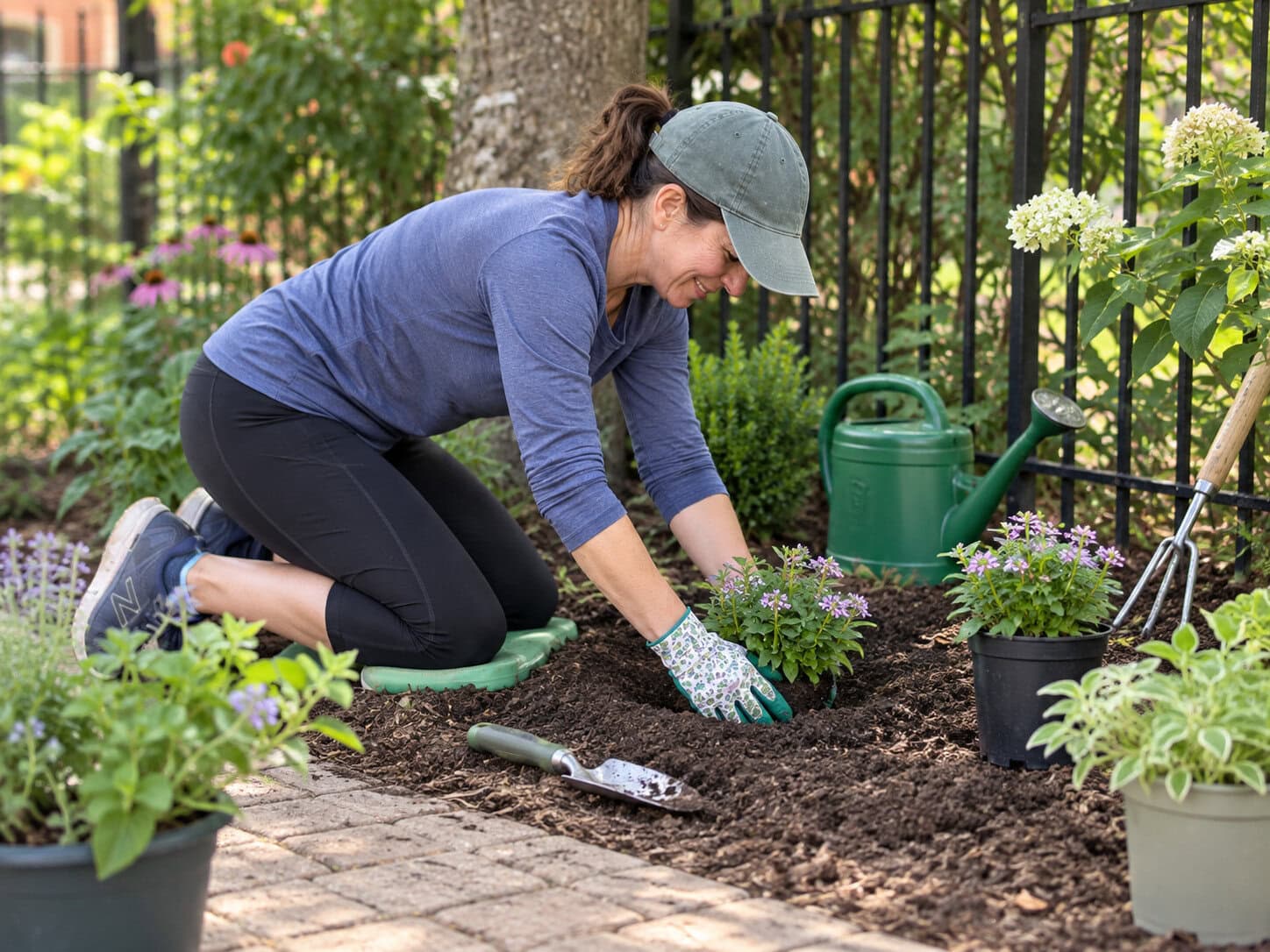
Is Gardening Good Exercise? What It Counts As (and What It Doesn’t)
TL;DR: Gardening counts as good exercise when tasks such as brisk raking, hoeing, mowing, digging, or pushing a wheelbarrow raise your breathing and heart rate for sustained periods. To make it count, work steadily for 15 to 30 minutes, use the talk test, and record only the active minutes when you can talk but not sing.
Gardening can be a surprisingly effective workout.
A morning spent digging planting holes, turning compost, pushing a wheelbarrow, or raking leaves can work your heart, lungs, legs, arms, grip, and core. You may finish with soil on your knees, tired shoulders, and the satisfying feeling that both you and the garden accomplished something.
But simply being outdoors for three hours does not mean you completed three hours of exercise.
The Key Difference
What matters is the task, your pace, and how long you keep moving. Rhythmic chores such as raking and mowing can reach moderate intensity. Heavy digging and loaded wheelbarrow work may become vigorous.
Slower jobs such as inspecting leaves, arranging pots, or snipping faded flowers still keep you active, but they are less likely to challenge your heart and lungs.
The useful question is not only, “How long was I in the garden?”
It is, “How much of that time did I spend working steadily?”
Does Gardening Count as Exercise?
Yes. Gardening counts as exercise when it requires roughly the same effort as a brisk walk.
Adults are generally advised to complete at least 150 minutes of moderate-intensity activity each week, 75 minutes of vigorous activity, or an equivalent combination. Muscle-strengthening activities are also recommended on at least two days each week.
Those active minutes can be divided into smaller sessions rather than completed all at once, according to CDC adult activity guidance.
Gardening can contribute meaningfully to those goals. NHS physical activity guidance includes pushing a lawn mower as moderate activity and heavy gardening, such as digging and shoveling, as muscle-strengthening work.
What Counts in a Real Garden?
A typical gardening session includes several levels of effort.
You might dig for ten minutes, pause to fetch a tool, carry compost to a raised bed, inspect a tomato plant, and then water containers at an easy pace.
All that movement is useful. However, the sustained portions, such as digging, raking, hoeing, mowing, and moving soil, are the parts most likely to count as moderate exercise.
Quick Take
Gardening counts as exercise when the work noticeably raises your breathing and heart rate. The clock alone cannot tell you whether a garden session was light, moderate, or vigorous.
The Weekly Garden Exercise Picture
| Weekly Goal | One Gardening-Based Way to Reach It |
|---|---|
| 150 minutes of moderate activity | Five 30-minute sessions of brisk raking, mowing, hoeing, active weeding, or moving compost |
| 75 minutes of vigorous activity | Shorter sessions of demanding digging, heavy compost turning, or strenuous land clearing |
| Two strength days | Heavy digging, lifting manageable soil bags, pushing a loaded wheelbarrow, and exercises that fill gardening’s muscle gaps |
You do not need to turn the vegetable patch into a boot camp. The point is simply to recognize when your normal garden jobs are already contributing to your weekly movement.
How Can You Tell Whether Gardening Is Moderate Exercise?
You do not need a smartwatch or heart-rate monitor.
You only need to notice how easily you can speak while working.
Use the Talk Test
During moderate-intensity activity, you should be able to talk but not sing comfortably.
During vigorous activity, you may manage only a few words before pausing for breath. The CDC intensity guide recommends this talk test as a practical way to judge effort.
Try saying a full sentence while raking, mowing, hoeing, or pushing a loaded wheelbarrow.
- Talking and singing both feel easy: The work is probably light.
- You can talk but not sing: You are probably working at moderate intensity.
- You can say only a few words: The work may be vigorous.
Do Not Judge the Workout by Sweat
Sweat can be misleading in the garden.
Potting seedlings on a humid afternoon may leave your shirt damp even when you are barely moving. Heat, direct sunlight, clothing, and humidity all influence how much you sweat.
Garden Note
Trust your breathing more than your damp shirt. Sweating can signal heat exposure without showing that your heart and lungs are receiving a vigorous workout.
Your Garden Changes the Difficulty
The same chore can feel completely different from one garden to another.
Digging crumbly compost into a raised bed is easier than breaking through sun-baked clay. Pushing an empty wheelbarrow along a level path is not the same as moving wet soil uphill. Pulling a few weeds from loose potting mix is gentler than hoeing a long vegetable row.
| Garden Condition | How It Changes the Work |
|---|---|
| Loose, crumbly soil | Makes digging and weeding easier |
| Compacted clay | Increases resistance and effort |
| Sloping ground | Makes mowing and wheelbarrow work harder |
| Wet compost or mulch | Adds considerable weight |
| Poorly sized tools | Can increase strain without improving the workout |
| Hot, humid weather | Makes work feel harder but does not always increase aerobic intensity |
Your fitness, soil type, slope, tools, weather, load, and pace all affect how hard your body must work.
Which Gardening Tasks Count as Exercise?
Garden work ranges from gentle pottering to demanding whole-body effort.
Researchers often describe activity using METs, or metabolic equivalents. One MET represents the energy used while resting quietly. Activities from 3 to 5.9 METs are generally classified as moderate, while activities at 6 METs or above are considered vigorous.
Garden Exercise Intensity at a Glance
| Intensity | What It Feels Like | Typical Garden Jobs | Approximate MET Examples |
|---|---|---|---|
| Light | Breathing remains easy and conversation is effortless | Potting at a bench, seed sowing, slow deadheading, gentle pruning | Light planting or potting: 2.6 |
| Moderate | Breathing is faster, but you can still talk | Brisk raking, active weeding, hoeing, mowing, wheelbarrow work | Raking: 4.0 Weeding: 4.5 Wheelbarrow work: 4.8 |
| Vigorous | You can say only a few words before pausing | Sustained heavy digging, turning dense compost, demanding land clearing | Vigorous digging or compost turning: 7.3 |
These figures from the Adult Compendium of Physical Activities provide a useful baseline, but they are not personal guarantees. Soil resistance, slopes, weather, tools, load, pace, and fitness all affect how demanding a task becomes.
The Best Garden Chores for Cardio
The strongest garden cardio usually comes from jobs that allow you to establish a steady rhythm.
Rhythmic Lawn and Bed Work
Brisk raking involves the shoulders, arms, back, core, and legs. Hoeing a vegetable row creates repeated upper-body movement while you step gradually along the bed.
Walking behind a mower also provides continuous movement. Slopes, thick grass, and a heavier mower make the job more demanding.
Moving Garden Materials
Loading, pushing, balancing, and emptying a wheelbarrow combine cardio with practical strength.
Several manageable trips are safer and often provide more useful continuous movement than one dangerously heavy load.
Heavy Digging and Compost Work
Digging is one of the toughest garden jobs. It uses the legs, arms, shoulders, grip, back, and core, especially when the soil is compacted or the compost heap is dense.
The Honest Last Place
Slowly potting seedlings at a comfortable workbench is wonderful garden time, but it is unlikely to provide much cardio.
That does not make it worthless.
Potting, deadheading, seed sorting, and gentle pruning can support coordination, hand strength, mobility, and a more active day. They simply belong in a lighter activity category.
Make Garden Work Count
- Choose one rhythmic job.
- Work steadily for 15 to 30 minutes.
- Use your breathing to judge the effort.
- Stop before fatigue spoils your technique.
- Count the active block rather than the entire garden visit.
How Do You Count Gardening as Exercise Minutes?
Count the periods when you are moving continuously and working hard enough to noticeably increase your breathing.
You do not need to dismiss a session simply because it lasted less than ten minutes. Any amount of moderate or vigorous activity can contribute to your weekly movement, although a 10-to-15-minute block is often long enough to settle into a useful rhythm.
Tool setup, plant inspection, photography, fence-side chatting, and relaxed watering may still be enjoyable and worthwhile. They simply should not be automatically recorded as cardio.
A Familiar Saturday in the Garden
Picture a home gardener heading outside on Saturday morning with an ambitious list.
Three hours later, his shirt is damp, his lower back feels stiff, and his arms have that heavy feeling that follows hard work. The paths are swept, the containers are watered, and a neglected bed finally has a fresh layer of compost.
The Emotional High
He feels quietly pleased. Surely he has completed three solid hours of exercise.
The Honest Review
When he thinks about how the morning unfolded, the picture changes.
He wandered between beds deciding where to begin. He stopped to talk with a neighbor. He watered the patio containers slowly. He spent several frustrating minutes searching for a hand trowel that was sitting beside the compost bin.
The sustained work was much shorter.
He had raked briskly, pushed several wheelbarrow loads, and dug compost into compacted soil for a combined total of about 40 minutes.
The Takeaway
The realization feels disappointing at first. He was busy all morning and was genuinely tired.
But the morning was not wasted. The quieter jobs kept him on his feet, improved the garden, and gave him the pleasure of being outdoors.
He simply learned that a productive garden session can contain both exercise and gentle movement.
This is a composite example rather than a story about one identifiable gardener. The pattern will feel familiar to anyone who has lost a trowel, stopped for a chat, or spent longer admiring a healthy tomato plant than intended.
A Simple Tracking Method
You do not need a fitness spreadsheet.
- Choose two or three active chores before you begin.
- Gather the tools and supplies you will need.
- Note the time when you start moving steadily.
- End the active block when you stop for a long break or switch to a relaxed job.
Example Garden Log
Tuesday: 25 minutes of raking and wheelbarrow work
Thursday: 18 minutes of hoeing and active weeding
Saturday: 35 minutes of mowing and moving compost
The goal is useful awareness, not perfect measurement.
A 30-Minute Garden Workout Example
| Time | Garden Activity | Purpose |
|---|---|---|
| 3 minutes | Walk around the garden and gather tools | Warm up |
| 10 minutes | Brisk raking or hoeing | Steady cardio |
| 5 minutes | Move manageable compost or mulch loads | Functional strength |
| 10 minutes | Continue mowing, raking, or active weeding | More active minutes |
| 2 minutes | Walk slowly, stretch, and drink water | Cool down |
This is only an example. Choose chores that suit your garden, body, fitness, and weather conditions.
What Kind of Exercise Is Gardening?
Gardening can provide cardio, functional strength, mobility, balance challenges, and plenty of everyday movement.
Cardiovascular Activity
Mowing, raking, hoeing, digging, and pushing a wheelbarrow can raise your breathing for long enough to contribute to aerobic fitness.
The strongest cardio jobs involve large muscle groups and allow continuous movement.
Example
Raking an entire lawn in steady passes is more likely to reach moderate intensity than repeatedly stopping to examine individual plants.
Functional Strength
Garden work develops the kind of strength you use in everyday life.
Lifting bags of potting mix uses your legs, grip, and core. Pushing a wheelbarrow challenges your arms and trunk. Squatting to weed and standing again requires lower-body strength.
Heavy gardening can count as muscle-strengthening activity when it makes your muscles work hard enough that you need a brief rest before repeating the effort.
Mobility
Gardening regularly asks you to reach, kneel, squat, bend, carry, and change levels.
These movements can help keep your body active through useful ranges of motion. However, remaining hunched over one bed for too long may create stiffness rather than balanced mobility.
Mobility Note
Switch between standing and ground-level chores. Change position before discomfort builds rather than waiting until your back or knees begin complaining.
Everyday Movement
Not every beneficial movement needs to qualify as formal exercise.
Walking between beds, carrying hand tools, standing to prune, and making trips to the compost heap all reduce sitting time and add movement to your day.
Even when the activity remains below moderate intensity, it is still more useful than remaining seated.
Can Gardening Replace Walking or the Gym?
Active gardening can replace some walking sessions, but it rarely replaces a balanced exercise routine.
Can Gardening Replace Walking?
Yes, when the garden work is continuous and moderately demanding.
A steady session of raking, hoeing, mowing, or moving compost may challenge your heart and lungs in a similar way to a brisk walk.
A relaxed half hour of deadheading and checking seedlings offers different benefits. It keeps you moving and gets you outside, but it may not raise your breathing enough to count as moderate cardio.
Can Gardening Replace Strength Training?
Only partly.
Gardeners do plenty of bending, gripping, lifting, carrying, and pushing. Those actions build useful strength, but they do not train every major muscle group evenly.
Garden work often provides little pulling exercise for the upper back. It also does not offer a controlled way to make resistance gradually harder over time.
What Should Gardeners Add?
Two short off-garden sessions each week can fill the main gaps:
- Pulling movements for the upper back
- Controlled pushing exercises
- Core stability work
- Single-leg balance practice
- Gentle shoulder and hip mobility
Adults aged 65 and older are advised to include balance activity alongside aerobic and muscle-strengthening work.
Quick Take
Gardening can supply plenty of cardio and practical strength. A small amount of pulling, balance, and core work makes the overall routine more complete.
The goal is not to replace gardening with gym time. It is to keep your body capable of digging, planting, pruning, and harvesting comfortably for years to come.
7 Ways to Make Gardening a Better Workout
You can make garden work more active without rushing, overloading the wheelbarrow, or turning a peaceful hobby into punishment.
1. Choose a Rhythmic Task
Start with a job you can repeat steadily, such as raking, hoeing, mowing, or moving mulch.
Tasks that involve constant stopping are less likely to keep your breathing elevated.
2. Group Active Chores Together
Instead of raking for five minutes and then switching to deadheading, complete the rhythmic task in one manageable block.
Rake the lawn before checking flowers. Move several sensible loads of compost before watering. Hoe one full bed before stopping for a break.
3. Gather Your Tools First
Nothing interrupts your rhythm like searching for gloves, twine, pruners, or the trowel you were holding five minutes ago.
Place what you need in a bucket, garden trug, or wheelbarrow before beginning.
Before You Start
Make sure your tools are ready, water is nearby, the wheelbarrow is usable, and you know which active job you plan to tackle first.
4. Alternate Body Positions
Avoid spending your entire session bent over one bed.
- Rake while standing.
- Carry leaves to the compost area.
- Weed at ground level.
- Stand to prune a shrub.
- Finish with watering.
This gives overworked muscles time to recover and prevents one part of your body from carrying the entire session.
5. Add Distance, Not Dangerous Weight
Several manageable wheelbarrow trips are safer than one overloaded journey.
Container gardeners can add movement by carrying a comfortably filled watering can between the tap and pots. Do not fill it to the brim simply to make the job harder.
6. Work in Repeatable Blocks
A focused 15-to-30-minute session is often more useful than an exhausting afternoon that leaves your back or knees complaining for several days.
Stop while your posture and lifting technique are still controlled.
7. Finish With a Lighter Job
End with gentle watering, walking, or tidying rather than stopping immediately after heavy digging.
This gives your breathing time to settle and provides a natural transition out of the active session.
Safety Rule
The most useful garden workout is one you can repeat without injuring yourself.
How Many Calories Does Gardening Burn?
There is no single calorie figure for gardening because the word covers everything from sowing seeds at a table to digging heavy clay.
What Changes the Number?
Calorie use depends on:
- The specific garden task
- Your body size and fitness level
- Your working pace
- The weight you carry or push
- Soil resistance and terrain
- Temperature and rest breaks
MET values can be used to create a rough estimate, but they do not perfectly account for differences in age, fitness, body composition, or resting metabolism.
The Adult Compendium research paper is designed primarily to standardize activity estimates for research rather than provide exact personal readings.
Reality Check
A fitness watch may treat an hour of gardening as one continuous activity. It may not know that you spent ten minutes chatting, five minutes looking for a tool, and another ten minutes watering slowly.
Treat calorie numbers from watches, apps, and online calculators as estimates.
For most gardeners, tracking active minutes will be more useful than chasing an exact calorie total.
Common Myths About Gardening as Exercise
Myth 1: Every Hour Outside Is an Exercise Hour
An hour in the garden may contain digging, watering, tool hunting, plant inspection, and rest. The whole session involves movement, but it may not all be cardio.
Myth 2: Sweating Means the Work Is Vigorous
Heat and humidity can make gentle work feel exhausting. Judge the effort by your breathing and ability to speak.
Myth 3: Weeding Is Always Light
Pulling a few weeds while seated may be gentle. Continuous hoeing, squatting, and moving along a large bed can become moderate exercise.
Myth 4: Gardeners Do Not Need to Warm Up
Digging into hard ground or lifting a heavy bag with cold muscles can strain the back, shoulders, or knees.
Begin with walking and lighter chores before tackling the most demanding work.
Myth 5: One Exhausting Saturday Is Best
A marathon session can leave you too sore to move comfortably for several days.
Shorter, repeatable sessions spread through the week are often easier on the body and more useful for creating a consistent habit.
Myth-Busting Summary
| Myth | Better Way to Think About It |
|---|---|
| Every garden minute counts as cardio | Count the sustained active portions |
| Sweat measures intensity | Breathing is a better guide |
| Weeding is always light | Pace and posture can make it moderate |
| Gardening needs no warm-up | Heavy chores deserve preparation |
| Longer is always better | Repeatable sessions often work best |
How Can You Garden More Safely?
Garden work may feel informal, but heavy chores place real demands on your body.
Start Gently
Walk around the garden, roll your shoulders, and begin with a lighter job before digging, shoveling, or moving heavy containers.
Lift With Control
Keep bags, pots, and tools close to your body. Bend through your hips and knees, then use your legs to stand.
Avoid twisting while holding a load. Turn by moving your feet.
Change Tasks Before Your Technique Slips
Alternate heavy and light chores rather than digging continuously until your back and shoulders are exhausted.
Fatigue often appears first as poor technique. You may begin rounding your back, twisting carelessly, or jerking the spade instead of moving with control.
Respect the Heat
Work during the cooler parts of the day when possible, drink water, and take shade breaks.
Stop if you experience sharp pain, dizziness, chest discomfort, or unusual breathlessness.
Garden Safety at a Glance
| Before the Job | During the Job | After the Job |
|---|---|---|
| Begin with light movement | Keep loads manageable | Walk slowly for a minute |
| Gather suitable tools | Change positions regularly | Drink water |
| Check the weather | Avoid twisting with weight | Notice unusual pain |
| Plan shade and water breaks | Stop before technique slips | Let tired muscles recover |
Health Note
People with chronic health conditions or disabilities should ask a healthcare professional about suitable types and amounts of activity. Someone who has been inactive and plans to begin vigorous exercise should also consider seeking individual guidance first.
Frequently Asked Questions
Is Digging Good Exercise?
Yes. Digging can work your legs, arms, shoulders, grip, core, and back while raising your breathing.
Research estimates range from about 3.5 METs for light-to-moderate digging or composting to 7.3 METs for vigorous effort.
Digging Tip
Change sides regularly, avoid twisting with a loaded spade, and rest before tiredness makes your movements sloppy.
Does Container Gardening Count as Exercise?
Container gardening provides useful movement, especially when you stand, squat, walk between pots, and carry manageable watering cans.
Potting at a bench is usually light activity. A larger container garden can become more active when it involves repeated walking, lifting, and watering.
Does Watering Count as Exercise?
It depends on how you do it.
Standing beside one bed with a lightweight hose may be gentle. Walking around a large garden, moving a hose repeatedly, or carrying sensible watering-can loads requires more effort.
The Adult Compendium lists watering while standing or walking at approximately 4.0 METs, although your actual effort will depend on pace, distance, and load.
Is Raking Good Cardio?
Raking can provide moderate cardio when you cover a reasonable area and maintain a steady pace.
Moderate lawn or leaf raking is estimated at approximately 4.0 METs.
Alternate your hand position occasionally and avoid twisting repeatedly in the same direction.
Is Gardening Enough Exercise for Adults Aged 45 to 70?
Active gardening can provide a substantial share of weekly cardiovascular activity for adults in this age group.
However, it may not train every muscle group or provide enough deliberate balance work. Pairing active gardening with two short strength and balance sessions creates a more complete routine.
Is Gardening Better Than Sitting?
Yes. Even gentle jobs such as sowing seeds, potting, pruning, and walking between beds add movement to your day.
More demanding chores can provide additional cardiovascular and strength benefits, but lighter garden activity still has value.
The Honest Takeaway
Gardening is good exercise when you choose a task that lets you move steadily enough to breathe faster.
Brisk raking, hoeing, mowing, digging, compost turning, and wheelbarrow work can all contribute meaningful active minutes. Potting, deadheading, gentle pruning, and relaxed watering provide lighter movement and remain an important part of the pleasure of gardening.
Your Next Garden Session
Choose one rhythmic job, such as raking, hoeing, mowing, or moving compost. Work steadily for 15 minutes, then check how easily you can speak.
You do not need to turn every trip outside into a workout.
When your breathing is faster but conversation is still possible, your garden is giving you more than flowers, food, and fresh air.
It is giving you a real workout too.